 THE MAGAZINE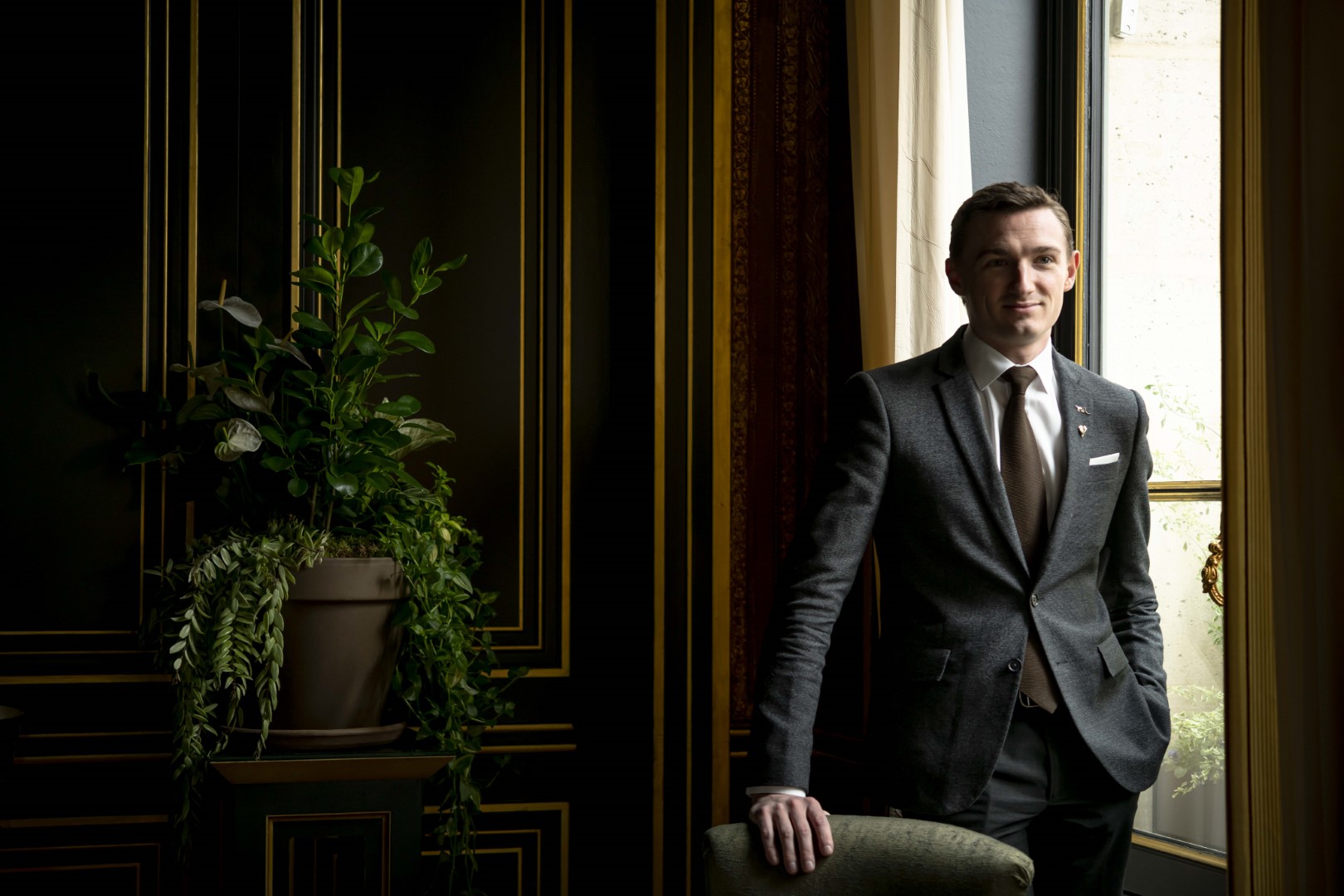




At the head of the wine program at La Réserve and Le Gabriel***, Gaëtan Lacoste embodies a new generation of sommeliers — demanding, visionary, and open to the world. More than a messenger of wine, he views his craft as a true key to the guest experience, where emotion, knowledge, and an eye for detail come together to complement and elevate the cuisine. A member of Les Grandes Tables du Monde, he shares his vision of a profession in transformation: one that bridges transmission, creativity, and new horizons.
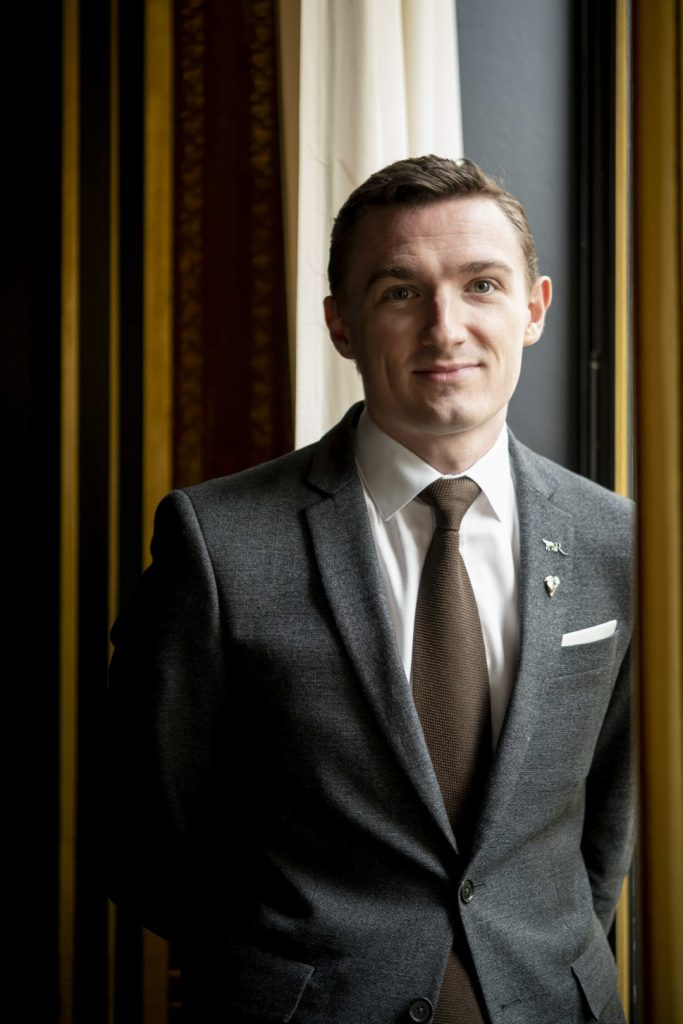
September 17, 2025 – Le Gabriel, Paris
Betty Marais: You lead the wine program at La Réserve and Le Gabriel. If you had to summarize your vision of the sommelier’s craft, what drives you every day?
Gaëtan Lacoste: Passing knowledge on, above all. That’s the heart of it. I have a small team of five — from apprentice to senior sommelier — and I want everyone to gain autonomy quickly. I was given my chance early, so I try to do the same: make sure each person contributes something meaningful — an idea, a discovery, a favorite bottle.
Our wine list is eclectic and colorful. We’re firmly anchored in the estates owned by our proprietor, Michel Reybier, but we’re also open to independent, free-spirited winemakers. Today, about 80% of our list is organic or biodynamic — not out of ideology, but out of taste. We choose wines that are sincere, balanced, and bright.
People still talk a lot about “natural wines” versus “classic wines.” Do these distinctions still matter to you?
Not really. Here, we don’t put wine into boxes. There are no dogmas, not for grand cru purists, not for zero-sulfur enthusiasts. The idea is to respond to every palate, every curiosity.
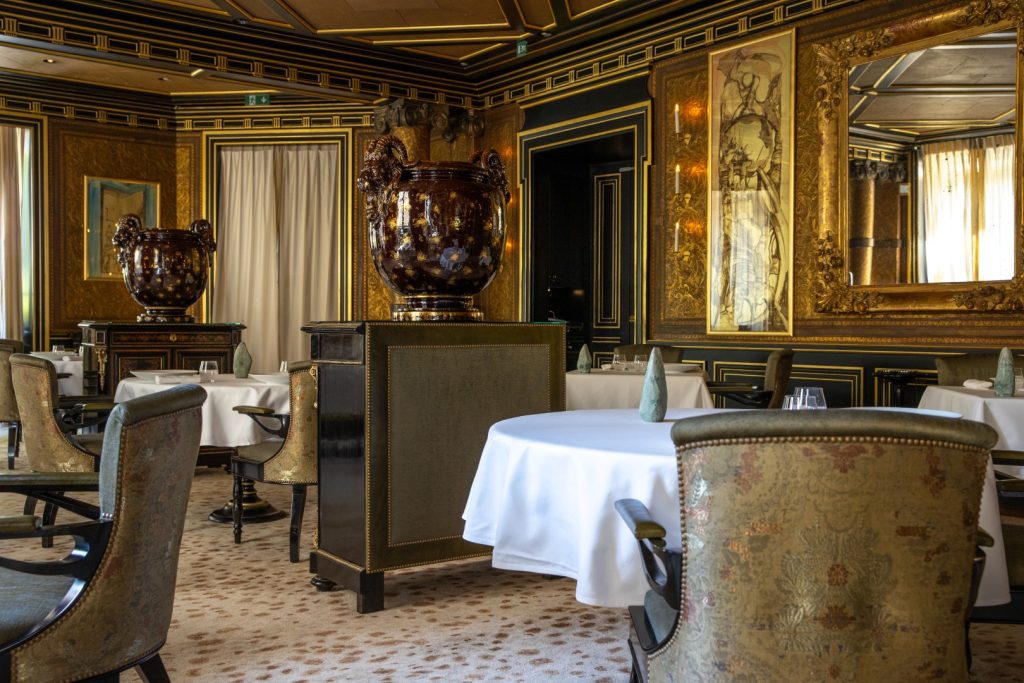
Our dining room is a world unto itself: an international guest who’s flown in just for dinner, a young couple of students, and a loyal local regular. They all come to feel something.
My ideal dining room would have three tables side by side — one with a great Burgundy, one with an old Bordeaux, and one with a Belgian beer. And sometimes, a non-alcoholic pairing is built around tea or an infusion. That diversity is what makes the sommelier’s job so exciting today.
You’ve also made Le Gabriel more accessible — which is rare in the palace world.
Yes, that was deliberate. When I arrived in 2021, we rethought the wine list, allowing guests to come just for a glass at the bar or a bottle at the counter — without having to commit to a full three-course dinner.
Before, prices were higher, the “palace effect,” I suppose. We lowered them, energized the selection, and the result is clear: guests are coming back, and younger guests are stepping in for the first time.
It’s a long-term vision — but that’s what keeps a house alive. We have to stay connected to reality. Neither I nor my team live in the palace world in our everyday lives. We love the bistros of the 11th arrondissement, noisy dining rooms, wines poured a little too warm… And I think that proximity and humility resonate with our guests.
This openness also extends to your view of beverages — today, sommeliers no longer deal with wine alone.
Exactly — and that’s wonderful!
Starting this profession in 2025 is thrilling: the field is vast. We’re talking about wine, of course, but also beer, cider, kombucha, kefir, coffee, tea… Everywhere you look, there are talented artisans. They push us to broaden our horizons.
I don’t see it as a constraint but as a natural evolution. Curiosity is essential. Take coffee — we now talk about origin, fermentation, acidity, just like with wine. And tea, when served in front of the guest, becomes almost theatrical. These new service rituals are powerful — and guests notice.
A kind of stagecraft, then?
Yes, but an honest one. When you serve a rare tea with precision and grace, guests remember it.
We recently introduced this tea ritual at Le Gabriel, and we were initially cautious. But guests were eager to be guided, to listen, to learn — and that’s incredibly rewarding.
In a house like Le Gabriel, what is the sommelier’s role alongside the chef?
The chef is the compass, of course — everything starts with the plate. But I’m lucky: Jérôme Banctel really listens. He’ll even adjust a texture or flavor if the wine requires it.
He comes from the Senderens school, where the wine often dictated the dish — and he’s kept that sense of dialogue. Here, everyone tastes everything, from the interns to the maître d’. It creates a culture of sharing. You feel involved, responsible, part of something collective.
Building a cellar also means building an identity. How do you shape yours?
It takes time — years. One harvest at a time. You can’t have it all, and that’s frustrating, but now we’re seeing our own signature emerge: a living, curious, engaged approach to wine.
Guests feel it. Some return two years later and say, “We still remember that pairing — we came back for it.” That’s the ultimate reward. It means you created emotion that lasts.
And beyond passion, a cellar is a financial strategy too. It adds value to the restaurant. A head sommelier can significantly impact the economic balance of a restaurant or hotel. A well-built cellar is a long-term asset — a living treasure.
And France, compared to abroad?
Some countries are ahead when it comes to the immersive dining experience. Spain, for example, has been doing for ten years what we’re just beginning to explore.
And in Copenhagen, Alchemist pushes the idea of dining to its limits. Rasmus Munk is extraordinary — he blurs the line between storytelling, science, and sensation. In France, we still hold on to too many codes. We could dare more, without losing who we are.
How do you see the next generation of sommeliers?
They’re amazing — curious, open, connected. The sommelier of tomorrow will need to be a technician, a storyteller, and a researcher all at once.
The world of wine is evolving fast: younger generations are taking over family estates, bringing new ideas, new balances. We’re rediscovering places and producers we thought we already knew. The same thing is happening in restaurants — a more conscious, freer generation is coming in.
And guests — are they changing too?
Definitely. People drink less, but they want to drink better. Some are willing to spend €150 or €200 on a single glass. They’re seeking understanding, emotion, experience.
At the same time, there’s polarization — wealthier clients on one side, and others who save up for one extraordinary dinner a year. For them, we must remain accessible, or we risk losing touch.
If you had to imagine sommellerie in 2030?
It will be about total experience. The sommelier won’t just pour wine — he’ll create moments. Maybe service will start somewhere else: in the cellar, at the bar, in another space entirely.
New rituals, new gestures will emerge. But the essence will stay the same: creating connection, emotion, and meaning — for the right person, at the right time.
Through his generous and clear-sighted vision, Gaëtan Lacoste embodies a generation of sommeliers for whom the cellar is both a place of culture and of emotion. Curious about everything, grounded yet open to the world, he restores to the service of wine its truest purpose: the art of connection — sensitive, accessible, and alive.